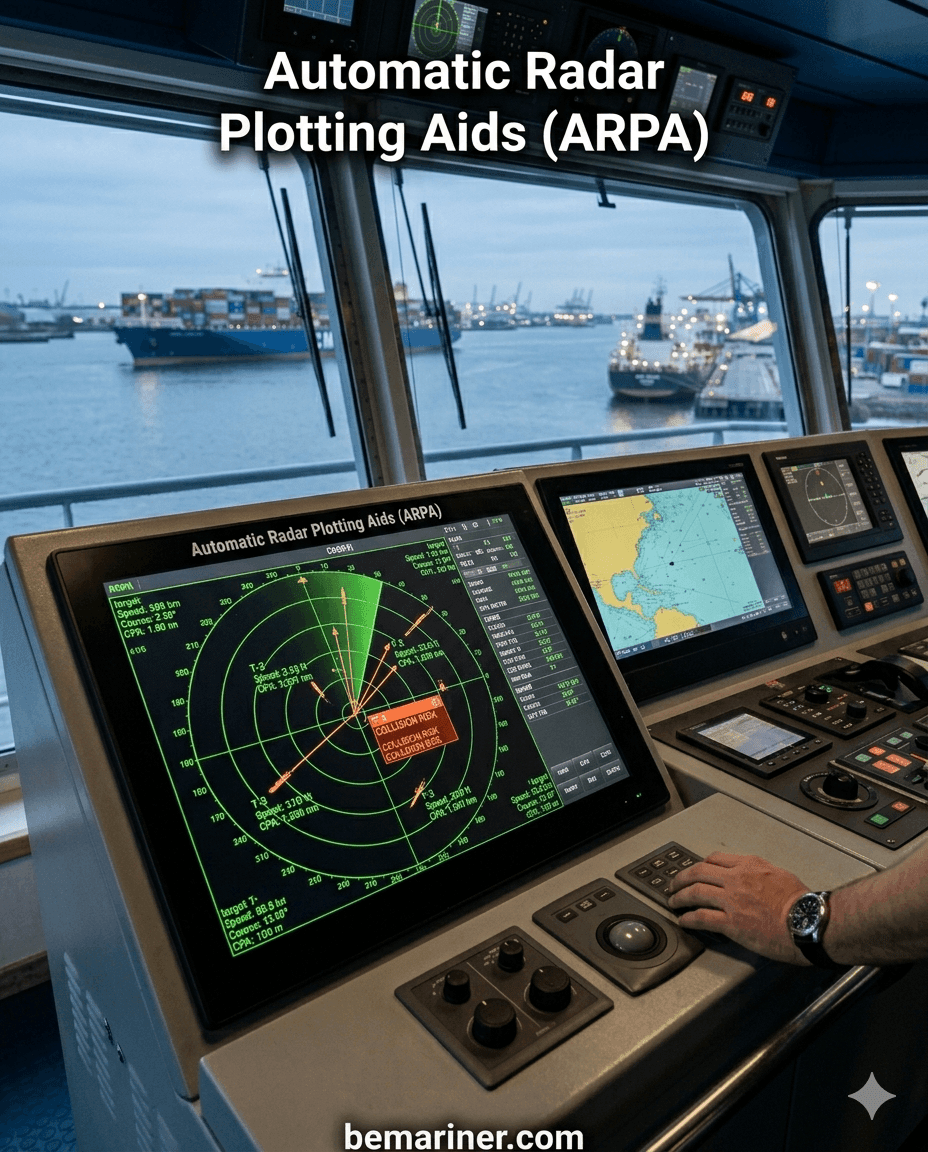
The Automatic Radar Plotting Aids (ARPA) course is a specialized five-day program that builds upon the skills learned in the Radar Observer Course (ROC). While ROC focuses on manual plotting, ARPA introduces the sophisticated automation that allows modern radar systems to track multiple targets simultaneously, providing instant data on their course, speed, and collision risk. This course is a mandatory STCW requirement for all navigating officers serving on vessels equipped with ARPA. It is designed to ensure that while officers utilize these advanced tools to reduce their workload, they remain acutely aware of the system's limitations and the critical importance of verifying automated data.
The curriculum covers the internal logic of the ARPA system, including target acquisition (manual and automatic), tracking theory, and the generation of alarms for CPA and TCPA (Time to Closest Point of Approach). Trainees learn to use "Trial Maneuver" functions to simulate how a change in their own ship’s course or speed will affect the relative movement of all surrounding traffic. A significant portion of the training is dedicated to understanding "System Errors" and "Sensor Errors," such as speed log or gyro input failures, which can lead to dangerously inaccurate ARPA data.
Approved by the DGS, the ARPA course utilizes high-end simulators to replicate high-traffic areas like the English Channel or the Malacca Straits. Students are challenged to manage multiple targets under pressure while maintaining a safe "Safety Domain." Completing the ARPA course is a vital step for any officer, as it enhances their ability to maintain a safe navigational watch in the modern, fast-paced maritime environment. It represents the perfect synergy between human judgment and technological precision, ensuring the safety of life and cargo on the global seas.